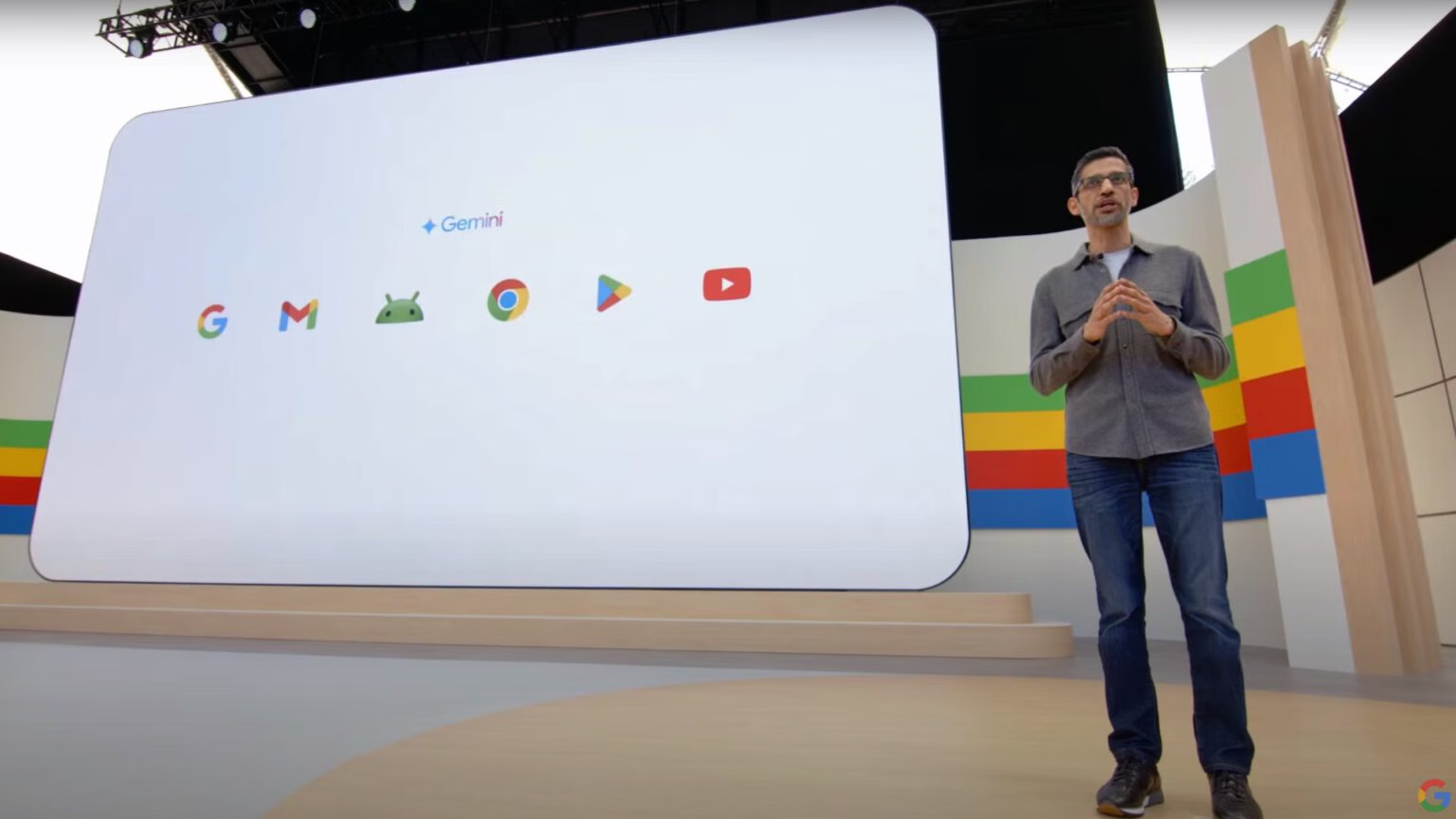
Sundar Pichai has dismissed claims that Google is losing momentum in the development of artificial intelligence. However, during the presentation of Alphabet’s results, the company’s CEO admitted that its models require improvement in terms of programming and the tasks performed by autonomous AI agents. It is precisely in these areas that OpenAI, Anthropic and competitors from China are currently making rapid progress.
The delay to Gemini 3.5 Pro is a source of concern for investors. The model, which was due to be launched in June, is still undergoing testing. Google has not indicated a new release date. Rather than focusing on the delay, Pichai highlighted the Flash series – faster and cheaper models designed for mass adoption in businesses.
The latest Gemini 3.6 Flash is set to be more efficient than its predecessor. According to Google’s data from the DeepSWE benchmark, which measures the execution of longer programming tasks, its score has risen from 37 per cent to 49 per cent. The model is also more efficient in terms of token consumption, which could reduce the cost of running AI-based services. The company has also introduced Gemini 3.5 Flash-Lite and the Flash Cyber model for cybersecurity-related tasks.
Pichai also announced that Google is currently undertaking its most ambitious Gemini 4 training process to date. The company plans to release new models from this family almost every month. However, it is not yet known when the most powerful version will be released, nor how it will fare against the competition.
Financially, Alphabet remains in good shape. In the second quarter, the group’s revenue rose by 24 per cent, whilst Google Cloud’s sales increased by 82 per cent. At the same time, the company raised its capital expenditure plan by $15 billion, to between $195 billion and $205 billion. Rising expenditure on data centres, AI chips and infrastructure is increasing the pressure to deliver quick results. Following the publication of the results, Alphabet’s shares fell by over 3 per cent in after-hours trading.
The key test for Google will therefore not be the number of launches alone, but its ability to combine powerful models with the cloud, its own chips and popular services. The scale of its ecosystem gives the company an advantage, but the delays show that the technology race remains wide open.