For years, the ‘nose’ ruled in purchasing departments. It was this famous merchant’s intuition, built up over decades of negotiation, that allowed opportunities to be sensed and reefs to be avoided. Today, however, relying solely on instinct is becoming akin to forecasting the weather from the flight of swallows in the middle of a cyclone.
According to the latest WEF Risk Report, we have entered an ‘age of competition’ in which threats are colliding with each other at a speed that the human mind cannot process on its own. The statistics are merciless: as many as 99% of experts predict that the coming years will be “turbulent” or even “stormy”. The scenario of calm and stability has become an exoticism reserved for only 1% of the greatest optimists.
Regulatory changes, cost spikes and staff shortages are hitting supply chains. At the same time, traditional methods are failing. Today, no one asks anymore if there will be disruption – the question is how quickly we will react to it. So clinging to the old school of ‘feeling the market’ is not bravery, but a risky mismatch with reality.
In order to ride out this storm, we must acknowledge that intuition is not enough today. To navigate effectively, purchasing departments need to swap the glass ball for precision analytics.
Procurement 4.0 – from Excel to the prediction engine
Until recently, the purchasing department was seen as a corporate ‘back office’ – a place where the main task was to painstakingly cut costs and keep an eye on invoices. Today, this role is undergoing a major metamorphosis. Procurement is a strategic engine that generates real value for the entire organisation.
This change did not come from a vacuum. The companies that have coped best with the crises of recent years had one thing in common: they were digitised. It was then that it was understood that supply chain resilience does not depend on luck, but on the quality of the information they have. However, simply collecting data is only half the battle. The real challenge of 2026 is not the lack of information, but its dispersion.
Most companies have mountains of data, but they are trapped in so-called ‘silos’ – separate sheets and systems that do not talk to each other. Modern procurement acts as a bridge connecting these scattered points. It ensures that the manager is no longer just looking in the rear-view mirror, analysing historical spend in Excel. He or she begins to look through the windscreen, using technology to anticipate upcoming events.
This is where a new competitive advantage is born. Turning scattered facts into a coherent strategy makes it possible not only to respond to crises, but to stay one step ahead of them. In essence, it is gratifying that technology has ceased to be a luxury – it has become a tool to turn the chaos of uncertainty into measurable risks that can be managed effectively.
AI – new optics
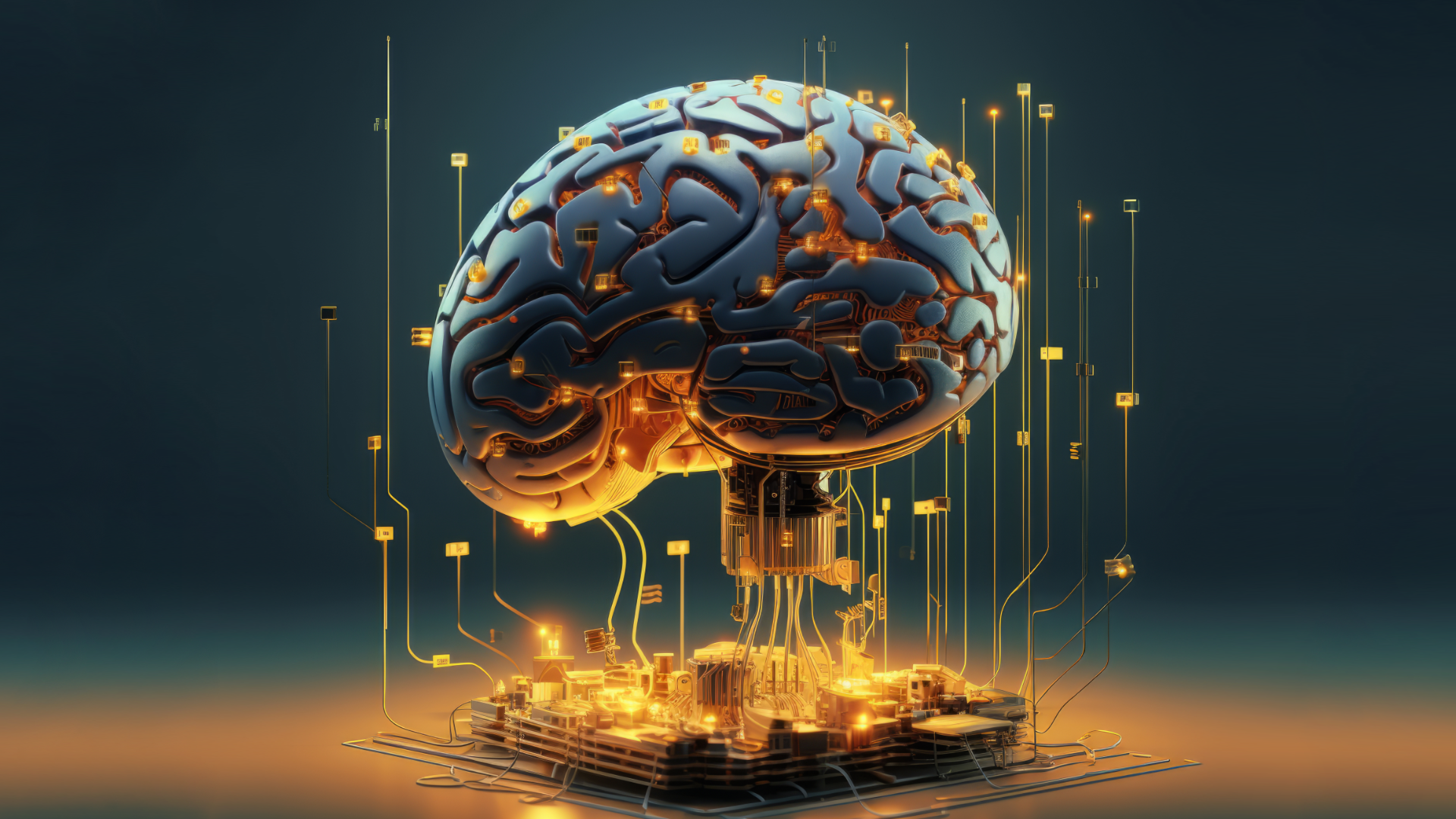
Implementing artificial intelligence in purchasing departments can be associated with a technological fad. Nothing could be further from the truth. In 2026, AI is a powerful analytical engine that sees what, to the human eye, remains hidden in a jumble of thousands of tables. It is a digital detective that can connect the dots between scattered data.
What does this look like in practice? Three areas that redefine the daily work of purchasing departments are key:
- Predicting demand: AI has stopped looking only in the rear-view mirror. Instead of only analysing historical spending, it models future scenarios. It takes into account market trends, social changes and even weather forecasts, providing precise answers before the question of stock is asked.
- Supplier risk assessment: Instead of waiting to be informed of counterparty problems, algorithms monitor warning signals in real time. They catch financial fluctuations or geopolitical tensions, allowing you to change your strategy before the supply chain is disrupted.
- Cycle optimisation: Thanks to the automation of tedious processes and intelligent recommendations, purchasing cycles are shortening dramatically. What used to require days of analysis and dozens of emails now happens almost seamlessly.
Artificial intelligence integration is the process of turning the chaos of data into a strategic advantage. It allows procurement to stop guessing and start knowing. AI does not replace humans here – it gives them the best possible fuel to make accurate decisions.
Business cost of delay
Time in business moves much faster than the pages on the calendar suggest. While 2030 seems like a distant future, the fact is that we will welcome that year in just 14 quarters, and from a technology perspective, that time will pass faster than you might think. The data is inexorable: global investment in artificial intelligence is going into the trillions of dollars. This is not money being spent on futuristic experiments, but real capital being pumped into infrastructure to ensure companies survive in the ‘competitive era’.
For purchasing managers, the warning signal is clear. Since as many as 80 per cent of leaders in this area consider digital transformation to be their absolute priority, the race for market dominance has long since started. The question is: what about the remaining 20 per cent? For them, the forecasts are harsh. Companies that do not integrate AI and advanced automation into their processes by the end of the decade could collide with an impregnable wall.
The cost of delay is not just a slightly lower margin. It is the risk of falling out of the loop altogether. Without digital support, purchasing processes will become too slow, too error-prone and simply too expensive compared to competitors who ‘think’ in real time. In 2030, running a large purchasing department without AI support will be akin to trying to send an email using a typewriter. It can be done with sentiment, but the rest of the world will be ahead of us before we have time to put a piece of paper in the drum. Investing in technology today is nothing more than taking out a policy for the future.
Man in the loop: AI with rules
Introducing AI into purchasing processes is not a ‘set it and forget it’ project. While algorithms can recalculate millions of scenarios in seconds, humans still need to keep their hand in. Technology devoid of ethics and oversight can become a source of new and unforeseen risks – from misinterpretation of data to lack of transparency with contractors.
The key to success is to avoid the ‘black box’ syndrome. If the system recommends a sudden change of a key supplier, the manager must understand exactly why. AI in purchasing must be based on trust and accountability. Only then does it become a real support and not a risky dictate of code over common sense.
What does this mean for the merchant himself? His role is not disappearing, but undergoing a fascinating evolution. He is changing from a person performing repetitive, tedious operations to a strategist and relationship architect. AI is taking over the ‘dirty work’ of analytics, freeing up time to do what a machine (for the time being) can’t: build long-term trust, negotiate creatively and react intuitively in tricky situations.
At the end of the day, AI won’t go to coffee with a supplier to discuss joint growth plans in uncertain times. The best performers in 2026 are those companies that rely on hybrid intelligence. This is a model where the cool logic of an algorithm provides hard evidence, but it is the human who makes the final decision, taking responsibility for it. In this duo, it is still us holding the baton.