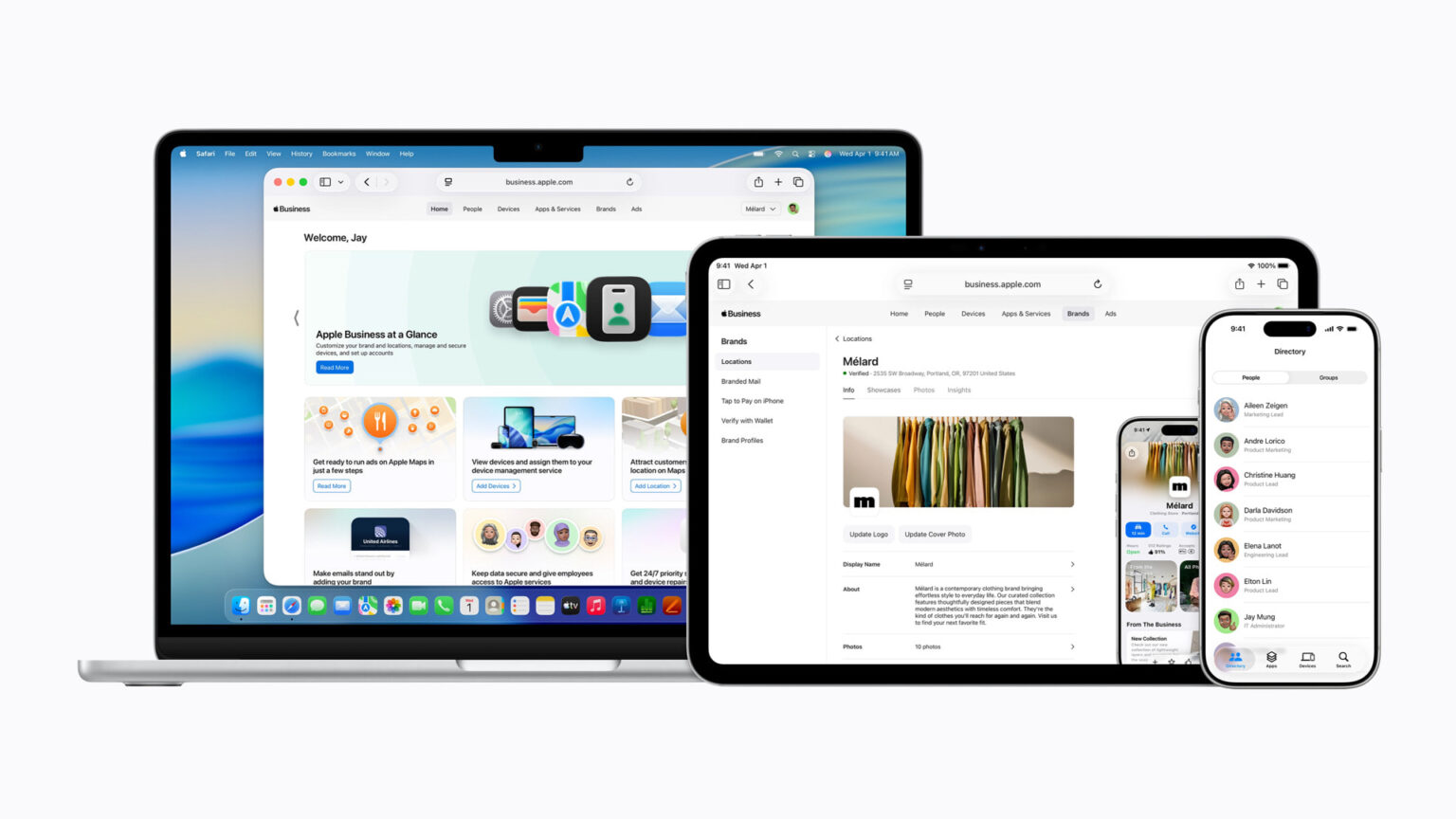
For years, Apple ‘s strategy towards its business customers has resembled a patchwork: robust devices, but fragmented management and marketing services. This is now changing. The announcement of the Apple Business platform, which will debut in April 2026, is not just a technical consolidation. It is a strategic move to take full control of the digital lives of small and medium-sized enterprises (SMEs), which until now have had to juggle between Google, Microsoft and third-party MDM solutions.
Apple’s decision to combine its hitherto dispersed tools – Essentials, Manager and Connect – into a single free body hits a sensitive point for smaller players: the lack of dedicated IT departments. The promise of ‘zero-touch deployment’ and automatic integration with Microsoft Entra ID or Google Workspace suggest that Apple wants to become the default operating system for start-ups. The ability to register a domain and run professional mail directly in the Apple ecosystem is a direct challenge to the Google Workspace suite.
The most interesting piece of this puzzle, however, is the entry into the local advertising segment of Apple Maps. From summer 2026, companies in the US and Canada will gain the ability to promote themselves in search results. While Apple places great emphasis on privacy, emphasising that location data does not leave the device, the direction is clear: the company is building its own advertising ecosystem. This is a logical extension of Business Connect, which allows brands to manage their presence in Maps or Wallet. Now this presence is gaining a commercial dimension.
From a business perspective, the removal of monthly Business Essentials fees and the simplification of the cost structure (now based primarily on iCloud space and AppleCare+ support) is a classic lock-in. Apple is lowering the barrier to entry to tie businesses more firmly to its hardware. Susan Prescott, Apple’s vice-president, calls it a “leap forward”, but for the market it is primarily a signal that Apple is no longer just a supplier of luxury laptops for graphic designers. It is becoming an end-to-end technology partner that wants to manage everything from an employee’s iPhone configuration to their email inbox to the advertising that will attract the customer down the street.